
Nero After the Great Fire


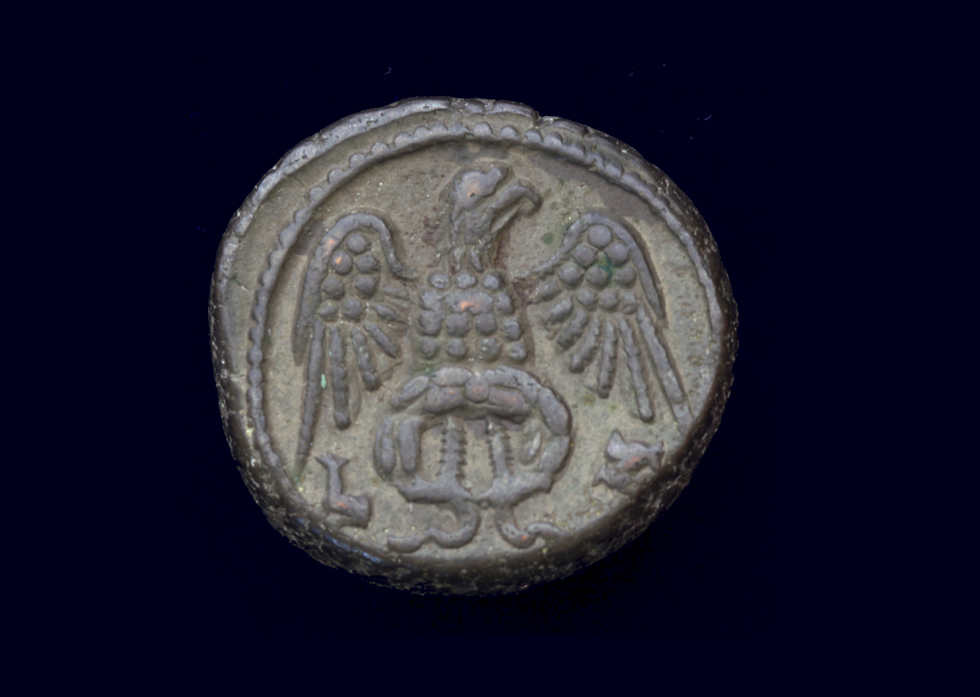
Nero, 13.41 gram Billion Tetradrachm 24mm, Regnal Year 11 (64/65 CE)
The Prefect of Egypt at this time was Gaius Caecina Tuscus (served AD 63–66). To fund the rebuilding of Rome and Nero’s "Golden House" (Domus Aurea), Egypt’s role as the empire’s breadbasket became critical. Grain requisitions (annona) and tax collection were aggressively enforced by the prefect Caecina Tuscus, leading to reported civil unrest and flight from villages to avoid taxation.
Unlike many of his predecessors, Nero took a direct, interest in Egypt. Just before this coin was issued, he made an expedition to the source of the Nile (c. AD 61-63), a praetorian mission that pushed south into the Sudd (modern South Sudan), blending exploration with potential plans for military expansion into Aethiopia.
The coinage of Year 11 offers a tangible record of Nero's projection of power during this crisis. The billon tetradrachm features a Radiate Head of Nero on the obverse, associating him with the sun god Helios/Sol - a divine status he increasingly embraced after the Fire.
The Eagle serves as a symbol of Imperial power that goes back to the time of the Ptolemies and the palm a symbol of victory.
Nero as Pontifex Maximus (High Priest)
A simpulum appears in the field alongside the Eagle. It is unusual to see such a strictly Roman priestly implement on Alexandrian coinage, which usually favored Greek or Egyptian iconography. The simpulum asserts Nero’s role as the High Priest of Rome. The inclusion of the simpulum on provincial coinage (for the first time) was likely a broadcast of the emperors efforts to piously restore the favor of the gods and protect the state. In the aftermath of the fire, Rome was gripped by fear that the gods were angry. As High Priest, Nero personally led massive expiatory rites and sacrifices to appease the gods.
Expulsion of Tuscus
While effective at extraction, Tuscus would soon fall from grace (AD 66) for a trivial offense: bathing in the baths constructed specially for Nero's anticipated, and never realized, visit to Alexandria.
Suetonius highlights this amongst many other ways in which Nero was erratic and cruel:
"Rufrius Crispinus, a mere boy, his stepson and the child of Poppaea, he ordered to be drowned by the child’s own slaves while he was fishing, because it was said that he used to play at being a general and an emperor. He banished his nurse’s son Tuscus, because when procurator in Egypt, he had bathed in some baths which were built for a visit of Nero’s. He drove his tutor Seneca to suicide, although when the old man often pleaded to be allowed to retire and offered to give up his estates, he had sworn most solemnly that he did wrong to suspect him and that he would rather die than harm him. He sent poison to Burrus, prefect of the Guard, in place of a throat medicine which he had promised him. The old and wealthy freedmen who had helped him first to his adoption and later to the throne, and aided him by their advice, he killed by poison, administered partly in their food and partly in their drink."
-Suetonius, Life of Nero 35.5
Cassius Dio also includes it in his list of Nero's offenses:
"Is it worth while adding that Nero ordered Paris, the pantomimic dancer, to be slain because the emperor had wished to learn dancing from him but had not the capacity? Or that he banished Caecina Tuscus, the governor of Egypt, for bathing in the bath that had been specially constructed for the emperor's intended visit to Alexandria?"
-Cassius Dio, Roman History, 63.18

Comments