
The "Bird" of Beroea

Updated: Feb 14

The Assassination of Caracalla
In early April of 217, the emperor Caracalla was on the move in northern Syria, traveling between Edessa and Carrhae to visit a local sanctuary of the moon god. Herodian, writing as a contemporary bureaucrat, describes the emperor stepping away from the column with a handful of attendants, drowsy from the pace of the march and the monotony of the road.
"[Herodian 4.13.4] At the halfway point he stopped to relieve himself; ordering his escort to ride off, he went apart with a single attendant. All the horsemen turned aside and withdrew for some distance, respecting the emperor's modesty."There, as both Herodian and Cassius Dio relate, a soldier from the imperial escort named Martialis (Martialus) approached and struck the emperor down. Before he could speak to anyone about his motives or accomplices, another guard killed him on the spot. The details differ between the two historians, but in both versions the murder is the work of a single soldier whose own death immediately follows.
The First Equestrian Emperor
Macrinus was unprecedented in Roman imperial history. Born in Caesarea in Mauretania to equestrian rank, he rose through legal and administrative offices before becoming praetorian prefect under Caracalla. Upon the emperor’s death, the eastern legions proclaimed him emperor.
He was the first Roman emperor of purely equestrian origin, lacking senatorial ancestry and dynastic legitimacy. His authority rested almost entirely on military acclamation. The Senate acquiesced largely because the army had already decided.
Herodian and Cassius Dio imply Macrinus’ complicity in the assassination of Caracalla, citing prophecy and motive. Yet the evidence remains circumstantial. Macrinus clearly had opportunity and incentive, but no direct testimony survives. Modern scholarship generally regards his involvement as highly probable but not demonstrable beyond reasonable doubt.
Macrinus know that his position vulnerable. To clothe his rule in more acceptable colors, he took the name Severus and turned to dynastic imagery to support his legitimacy. His young son - still a child - was given the name Marcus Opellius Antoninus Diadumenianus and the title Caesar in 217, with a brief promotion to Augustus during the crisis of 218. The new name “Antoninus” was no accident: it was meant to evoke the Antonine and Severan lines, and above all Caracalla himself.
The Son of the Usurper

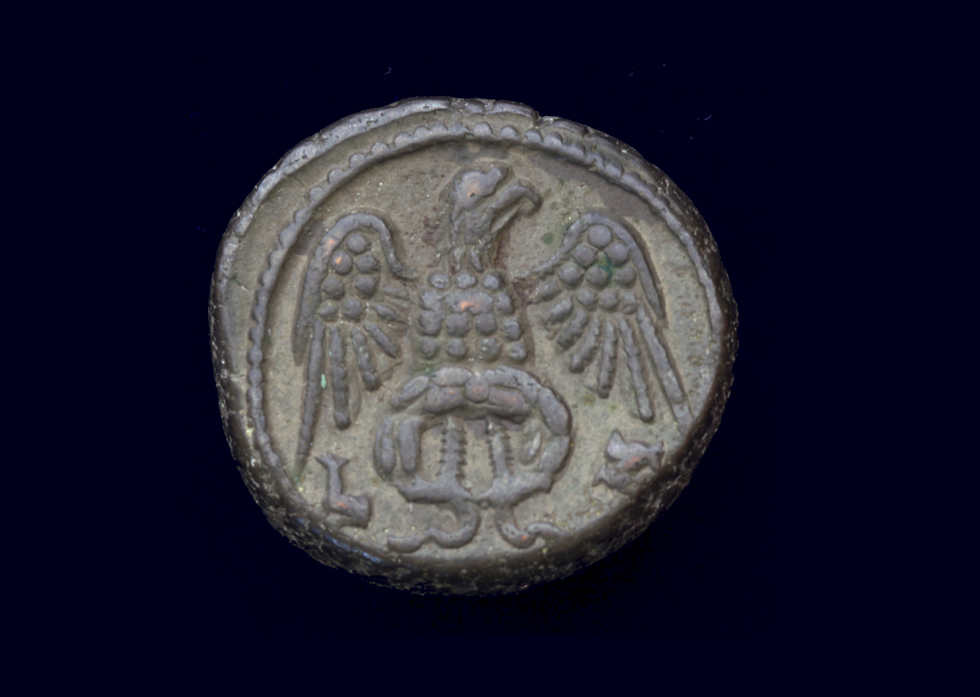
Syria, Cyrrhestica, Beroea; Diadumenian, as Caesar, 217-218; AR Tetradrachm (Billon, 28 mm, 14.29 g, 6 h).
Obv: Μ ΟΠ•ΔΙΑΔ•ΑΝΤΩΝΙΝΟC Κ Radiate, draped and cuirassed bust of Diadumenian to right.
Rev: [ΔΗΜΑΡ]Χ ЄΞ ΥΠΑΤΟC Δ / Β - Є Eagle with spread wings standing facing, head to right and holding wreath in beak; between the eagle's legs, bird standing facing.
Ref: Prieur 897. RPC V.3 online 80433. Very rare and attractive. Minor weakness on the obverse, otherwise, very fine. From a European collection, formed before 2005.
The coinage of Diadumenian, the young son of the usurper Macrinus, was struck during a period of intense military and fiscal crisis in the Roman East. While the primary mint of Antioch produced the bulk of the silver tetradrachms used to pay the legions, the mint of Beroea (ancient Halab) operated as a vital auxiliary workshop. This specimen is cataloged by Prieur as 897, with the bird of Beroea and the youthful portrait of Diadumenian distinguishing this issue from the massive output of Antioch.
Beroea’s style is often described as "harder" or more angular than the fluid, Hellenistic style of Antioch. This specimen, however, shows a high degree of artistry, particularly in the rendering of the eagle’s plumage.
Prieur's type corpus, compiled from over 12,680 Syro-Phoenician tetradrachms, records only four specimens of this coin (Prieur 897). Across the full range of Diadumenian issues from Beroea (Prieur 893–898), the tallies are stark: 3, 1, 3, 35, 4, and 3 specimens respectively, with only Prieur 896 surviving in any quantity.
The Macrinus issues from the same mint (Prieur 889–892) tell a similar story. The ratio for the present coin is roughly thirteen to one against its nearest Antioch equivalent. As an auxiliary workshop activated to handle overflow demand during the Parthian indemnity crisis, its total production was a fraction of Antioch's, and its coins were likely concentrated in military pay distributions that were spent, melted, or lost in the field. A Beroea tetradrachm of Diadumenian is a rare find.
Declaring Legitimacy
The obverse presents a high-relief portrait of Diadumenian, described as:
Radiate, draped and cuirassed bust of Diadumenian to right.The legend is particularly clear on this specimen, featuring distinct interpuncts (dots) separating the names: •Μ ΟΠ•ΔΙΑΔ•ΑΝΤΩΝΙΝΟC Κ (Marcus Opellius Diadumenianus Antoninus Kaisar)
The inclusion of "Antoninus" is the crucial propaganda element here. Diadumenian’s father, the usurper Macrinus, lacked a dynastic claim to the throne. By bestowing the Antonine name upon his son, he attempted to create a fictitious continuity with the Severan dynasty (specifically Caracalla) to appease a suspicious and restless army.
Beroea’s Distinct Mark
The reverse distinguishes this coin from the more common issues of Antioch.
Eagle with spread wings standing facing, head to right and holding wreath in beak.While the standard Syrian tetradrachm features an eagle looking left (right side of coin), this variety (Prieur 897) the eagle looks right (left side of coin). The distinguishing features of this variety are found in the field marks:
Mint Symbol: Between the eagle's legs stands a bird facing left. This symbol is the mint mark of Beroea, contrasting with the star of Antioch or the bell of Emesa.
Field Letters: The letters B and Є flank the eagle’s head. The B is an abbreviation for Beroea, while Є (Epsilon) indicates the fifth officina (workshop).
Legend: [ΔΗΜΑΡ]Χ ЄΞ ΥΠΑΤΟC Δ. The Delta (Δ) at the end of the legend is specific to this die sequence.
Here is the translation and numismatic breakdown of the Greek legend [ΔΗΜΑΡ]Χ ЄΞ ΥΠΑΤΟC Δ.
The "Frozen" Legend
"ΔΗΜΑΡΧ ЄΞ ΥΠΑΤΟC Δ" = "ΔΗΜΑΡΧΙΚΗΣ ΕΞΟΥΣΙΑΣ ΥΠΑΤΟΣ Δ"
"Invested with Tribunician Power, Consul for the 4th time."
There is a significant historical discrepancy in this legend that is important to note. Diadumenian was a child (aged ~9–10) and his father, Macrinus, only ruled for about 14 months. Neither of them served as Consul four times (Δ). This legend is a "Frozen" or "Immobilized" Legend. The mint at Beroea simply copied the legend from the previous emperor, Caracalla, who was Consul for the 4th time (COS IV) at the time of his death.
The legend repeats the consular count of Caracalla’s later issues and appears not to have been updated for the new regime, a phenomenon Bellinger and later numismatists note for these Syrian tetradrachms.
The Bird of Beroea
Bellinger, calling the mark a "little animal" in his 1940 publication includes an entertaining explanation for the mark:
"Speaking as an ornithologist I protest that it is not a bird; Ronzevalle’s explanation seems to me to leave altogether too many details unexplained; never having seen a griffon from in front I cannot say how much this looks like one. None of the suggestions has any obvious connection with Beroea, but, fortunately, for our purpose the question is immaterial; the mint is sure."While the attribution from Leu conservatively describes a "bird standing facing," the identification remains debated. A structured assessment clarifies the issue:
Criterion | Avian | Griffin |
Consistent four legs visible | No | Required |
Crest morphology | Present | Possible |
Clear wings | Yes | Yes |
Parallel provincial griffins | Rare in this format | Limited |
The Griffin Theory: Most older catalogs and many dealers identify this figure not as a bird, but as a Griffin. while there are claims that on high-grade specimens where the die work is sharp, the creature often appears to have ears and four legs, rather than two legs and wings alone, I haven't found a convincing example. A winged, four-legged creature with a beak is, by definition, a griffin.
The Symbolism: In Roman mythology, the Griffin was the guardian of gold and hidden treasures. Placing a griffin on a high-value silver coin (which was used to pay troops) served as a symbolic protector of the state's treasury. It is also associated with Apollo (a sun god), which aligns with the "Radiate" (solar) crown worn by Diadumenian on the obverse.
The Local Cult Theory: Beroea (Aleppo) was an ancient city with deep religious roots long before the Romans arrived. It was the center of the worship of the Storm God Hadad (Zeus). Mint marks in the provinces often referenced local deities to appease the local population. If the figure is a bird, it may represent a sacred animal associated with a local Syrian deity worshiped in Aleppo, distinct from the Roman Eagle.
Other options?

Could it be a Syrian ostrich or Struthio camelus syriacus as the animal in question? probably not - the first issue is the crest - coming off the top of it's head. The Syrian ostrich (aka Arabian ostrich) was driven to extinction by excessive hunting in the mid-twentieth century. The last reported Arabian ostrich died in Wadi al-Hasa, north of Petra, Jordan in 1966.
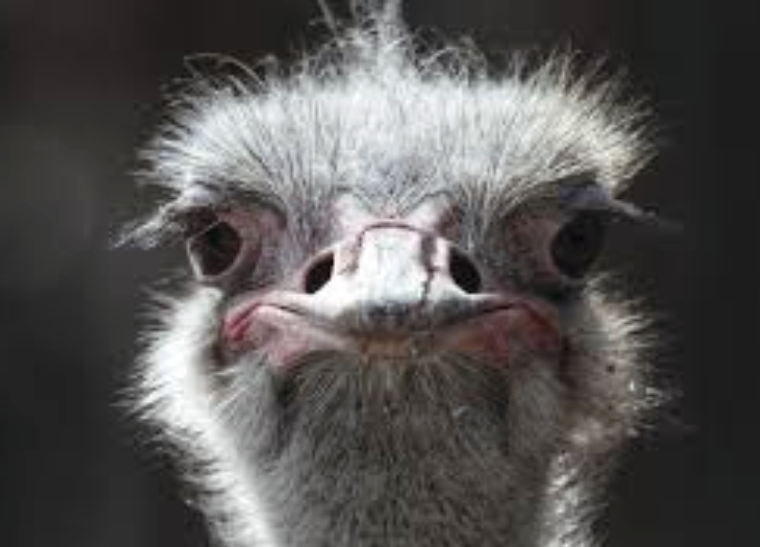
Also the neck is too short and the ostrich was not a bird that would have evoked civic pride. In addition to appearances as an exotic animal in the arena, it also made appearances at the dinner table - for recipes featuring ostrich as main dish see: De Re Coquinaria of Apicius VI.1 e.g.:
210 Boiled Ostrich In Struthione elixo: A stock in which to cook ostrich: pepper, mint, cumin, leeks, celery seed, dates, honey, vinegar, raisin wine, broth, a little oil. Boil this in the stock kettle with the ostrich, remove the bird when done, strain the liquid thicken with roux. To this sauce add the ostrich meat cut in convenient pieces, sprinkle with pepper. If you wish it more seasoned or tasty, add garlic during coction.A Phoenix is another possibility: a mythical winged beast and native to the solar theology of the Levant. Although as griffin is technically a mythical bird.

The Northern Bald Ibis (Geronticus eremita) was indigenous to the limestone cliffs of the Beroea region and its distinct occipital crest also poses a possibility.

The Ambiguity: Because Beroea was a secondary mint used only for overflow production, the die engravers may not have been the best artists. What was intended to be a specific mythological beast ends up looking like a generic "chicken" or bird due to the small scale and hasty engraving.
Mint Accountability: Regardless of whether it is a griffin or a bird, its function is the most definitive part of its story. This symbol was strictly administrative. The Roman mint masters needed a way to instantly tell if a silver coin came from Antioch (Star), Emesa (Pedestal/Bell), or Beroea (Winged Animal). If a batch of silver was found to be debased (containing too much copper), officials needed to know which mint workshop to punish. This little bird/griffin was the "signature" of the Beroea workshop foreman, holding him accountable for the purity of the metal.
Historical Context: Beroea
Beroea (Aleppo) sat at a critical junction of the Roman road system leading to the Euphrates frontier. Coins from Beroea, alongside the heavy output of Antioch, fit a pattern of intense mint activity in the eastern war theater after 215, when Caracalla and then Macrinus had to keep large armies in the field. Following the assassination of Caracalla in AD 217, Macrinus faced immediate pressure to secure the loyalty of the eastern legions and pay a massive indemnity to the Parthians. To handle the volume, auxiliary mints like Beroea (ancient Halab) were activated.
"...Macrinus, both because of his natural cowardice (for, being a Moor, he was exceedingly timorous) and because of the soldiers' lack of discipline, did not dare to fight the war out, but instead expended enormous sums in the form of gifts as well as money, which he presented both to Artabanus himself and to the powerful men around him, the entire outlay amounting to two hundred million sesterces. And the Parthia was not loath to come to terms..."
-Cassius Dio, Roman History,79.27The Death of Diadumenian
The reign of the young caesar was short-lived. In June AD 218, Macrinus’s army was crushed by the supporters of Elagabalus outside Antioch. Macrinus shaved his beard and fled in disguise but was captured. Macrinus entrusted his roughly 9-year-old son to loyal servants with instructions to smuggle him across the Euphrates river into Parthia (modern Iran) for safety.

According to Cassius Dio, the boy made it as far as Zeugma (a famous bridge-crossing city). He was recognized and captured just moments before escaping into safety. He was executed immediately, and his head was reportedly brought to Elagabalus as a trophy.
Conclusion
This Beroea tetradrachm is a rare provincial silver issue that also illustrates:
Dynastic fabrication - the Antonine name and radiate portrait as tools of constructed legitimacy.
Administrative continuity under crisis - frozen legend revealing institutional inertia.
Fiscal mobilization during war - auxiliary mint activation to sustain eastern legions.
The child (about age 9) depicted in cuirass (armor) and solar crown embodies the tension between image and reality af a child in a war zone. The coin projects continuity, authority, and stability; the regime lasted fourteen months.
As material culture, this tetradrachm preserves the mechanics of a fragile imperial experiment—an equestrian emperor attempting to convert military acclamation into dynastic permanence, and failing.
Macrinus was almost certainly living in Rome during Diadumenian's early childhood, climbing the social ladder of the capital's elite. Proclaimed emperor Macrinus and Diadumenian are the first dynasty to seize power and die without ever visiting the capital as rulers. Diadumenian held the title of Caesar for roughly a year before being elevated to Augustus in a last-ditch effort to save the regime. It failed; he was executed at age ten.
The ultimate fall of Macrinus was less a conventional military defeat and more a dynastic coup orchestrated by the Severan women. From her exile, Julia Maesa (sister to the late Julia Domna) leveraged her vast wealth to infiltrate the camps of the Legio III Gallica, spreading the rumor that her grandson, the future emperor Elagabalus, was Caracalla’s actual illegitimate son. Against the tangible, flesh-and-blood claim of a biological Antonine heir, the alternative fiction of Macrinus's adopted name crumbled, leading directly to the defection of the eastern legions.
References
Michel Prieur and Karin Prieur, The Syro-Phoenician Tetradrachms and Their Fractions from 57 BC to AD 253 (London: Spink, 2000), 122.
Kevin Butcher, Coinage in Roman Syria: Northern Syria, 64 BC–AD 253 (London: Royal Numismatic Society, 2004).
Prieur and Prieur, Syro-Phoenician Tetradrachms, 121–22. (See Prieur 886–888 for Macrinus and 893–898 for Diadumenian, all featuring the eagle head right).
Andrew Burnett, Michel Amandry, and Jerome Mairat, Roman Provincial Coinage V.3 (London/Paris: British Museum Press/Bibliothèque Nationale de France, Online), no. 80433.
Bellinger, Alfred R. The Syrian Tetradrachms of Caracalla and Macrinus. Numismatic Studies 3. New York: The American Numismatic Society, 1940.

Comments