
Hostilian, Apollo, and the Plague of Cyprian

In the Spring of 251, the mint at Rome struck a sestertius for the young Caesar Hostilian. The reverse shows Apollo seated in calm dignity, lyre at his side, under the legend PRINCIPI IVVENTVTIS - a promise of dynastic stability. Within months that promise was broken. Decius and Herennius Etruscus were dead after a battle at Abritus with the Goths. Hostilian too would die soon afterwards, perhaps by plague, perhaps by murder. Modern historians disagree over whether the the Plague of Cyprian had even reached the Empire when this coin was struck. That uncertainty is what makes this coin interesting.
In the mid-3rd century, the Roman Empire was struck by a devastating pandemic. St. Cyprian, the Bishop of Carthage, chronicled its horrors. In De Mortalitate, Cyprian describes the disease vividly
That now the bowels, relaxed into a flux, eviscerate the bodily strength; that a fire conceived in the marrow ferments into wounds of the throat; that the intestines are shaken with continual vomiting; that the eyes grow red with the force of blood; that in some, the feet or other parts of the limbs are amputated by the contagion of diseased putrefaction; that through the losses and injuries of the body, as the languor breaks forth, either the gait is debilitated, or the hearing is obstructed, or the sight is darkened—all this profits as a proof of faith.
-St. Cyprian, De Mortalitate X
Kyle Harper, wrote, in 2015, an article in the Journal of Roman Archaeology that proposed that the filovirus, a relative of Ebola, may have been the specific pathogen, given the described hemorrhagic symptoms and its high rate of transmission. He also used coins like mine to explain the timing of the devastating epidemic. Harper developed these arguments further in his 2017 Princeton monograph, The Fate of Rome.
Harper's article and book triggered a response from Sabine Huebner, John Haldon and others, that is critical of Harper's evidence, and the details of his claims. Notably around the timing, origin, and spread of the plague.
These details matter directly to the coin in front of us: if Harper is right, the Apollo on the Hostilian sestertius was struck into a world with raging hemorrhagic fever; if Huebner is right, the plague had not yet arrived when this die was struck, and the coin belongs to a world where the emergency was Gothic warriors at Abritus, not epidemic disease from Alexandria.
The fundamental question: Was the Apollo on this coin watching over an empire that had already been invaded by plague, or one that did not yet know what was coming?
What they agree
Both camps accept that a real, devastating pandemic occurred in the third quarter of the 3rd century CE, affecting populations across the Mediterranean world. Both agree it was genuinely pandemic in scale - not merely regional - striking Rome, Carthage, Alexandria, Greece, the Balkans, and Asia Minor. Both accept Cyprian's De Mortalitate as the richest symptom description, and both treat Dionysius of Alexandria, Zosimus, and the Byzantine chronicle tradition as essential, if complicated, sources. Neither disputes that the plague recurred in multiple waves over roughly two decades, or that it coincided with and likely worsened the broader political and military crisis of the 250s-270s CE.
Where they disagree
When did the pandemic begin? This is perhaps the most important dispute, because everything else - origin, causation, connection to Decius - flows from it.
Harper argues the plague erupted in Egypt as early as Easter 249 CE, relying heavily on two letters of Dionysius of Alexandria preserved in Eusebius (HE 7.21 and 7.22). He follows Strobel's dating of these letters to 249-250 CE, which allows him to claim the disease was circulating in Alexandria roughly two years before it reached Rome and Carthage.
Huebner takes apart this dating systematically. She points out that the overwhelming majority of scholars place these same letters in the early 260s CE, not 249. She argues that the letter to Hierax, which Harper treats as evidence of a first outbreak, makes far more sense written in Easter 262 CE, when Dionysius is looking back on a decade of persecution, civil war in Alexandria (the Macriani revolt), and bodies rotting in the streets. A lament about "recurrent epidemics" and a de-populated Alexandria is a retrospective reflection, not a first alarm. Harper, she argues, takes a paradoxical position of accepting Strobel's dating while rejecting Strobel's interpretation - Strobel himself did not think Dionysius was describing a real plague at all.
If Huebner is right, the earliest evidence for the plague falls not in 249 but in 251–253 CE. She relies on Aurelius Victor, De Caesaribus 30, who was writing around 360-361 CE, roughly 110 years after the events.
"When the senators had learned of this [deaths of the Decii] they voted the rank of Augustus to Gallus and Hostilianus and appointed Volusianus, the son of Gallus, as Caesar. Thereafter a plague broke out and while it raged ever more violently Hostilianus died but Gallus and Volusianus won popular favour because they meticulously and assiduously arranged the burials of all the poorest folk"Where Did It Enter the Empire?
Harper follows the late Byzantine chroniclers (Excerpta Salmasiana II, Symeon Logothete, Zonaras) in tracing the plague's origin to Ethiopia, traveling north up the Nile to Alexandria and then west across the Mediterranean. He treats the alleged Egyptian mass grave at Thebes (Tiradritti's excavation) and the earlier appearance in Alexandria as corroborating a southeastern entry point.
Huebner argues this Ethiopian origin story is a classical topos (literally "place" om Greek) - the place that is usually described as the source of pestilence since Thucydides described the Athenian plague. She argues that appearing only in late Byzantine sources, this is more likely a rhetorical convention rather than reliable historical memory. Huebner points to Zosimus, New History 1.26.2, to place the first outbreak among Roman troops fighting on the Danube against Scythian/Gothic invasions in 251/2 CE:
Besides the war on every side, which was insupportably burdensome to them, the cities and villages were infested with a pestilence, which swept away the remainder of mankind in those regions; nor was so great a mortality ever known in any former period. What Role Did the Plague Play in Religious Persecution?
Harper makes the strong causal claim that the Plague of Cyprian triggered financial, geopolitical, socio-political, and cultural crisis. He also links it to Decius's 249 CE edict commanding imperial sacrifice (the mechanism of Christian persecution), suggesting the plague prompted the religious crisis.
Huebner argues more cautiously. Since the plague postdates Decius's death, it cannot have caused or been connected to the Decian persecution. She accepts that the plague exacerbated religious crisis but resists treating it as the root cause, arguing the Gothic invasions and succession instability were primary.
She also points to the Heroninus archive - roughly 1,000 papyri of business correspondence from a large agricultural estate in the Egyptian Fayum, from 249 to 268 CE, the decades in which the pandemic spread. THese documents make no mention of pandemic or economic disruption. This challenges Harper's view of a pandemic in Egypt.
The Coin
Today's coin of interest was minted under Trajan Decius at the end of his reign. DEcius is the first emperor that the ancient sources describe as dying in battle on Roman soil against a foreign enemy, an event they recorded with shock. Trajan Decius died in June 251 CE at the Battle of Abritus fought in the province of Moesia Inferior (in modern Bulgaria). The gother were Goths led by king Cniva. Decius and his elder son and co-emperor Herennius Etruscus both died at Abritus, either in the battle itself in its immediate aftermath.

Hostilian, as Caesar, AD 250-251, Sestertius (27mm, 14.02g), minted Rome, 5th emission of Trajan Decius, AD 251 before July elevation to Augustus.
Obv: C VALENS HOSTIL MES QVINTVS N C, bareheaded and draped bust right
Rev: PRINCIPI IVVENTVTIS, Apollo seated left, holding branch and resting arm on lyre
Ref: RIC IV 215 (Decius); Banti 3.
Red-brown and green patina, smoothing. VF.Obverse: bare, draped bust right
Trajan Decius was the first emperor to introduce the double sestertius as a regular denomination. Around 250 CE, this was a significant attempt to reform the bronze coinage during a period of rapid inflation. During the mid-3rd century, the standard weight of the sestertius dropped from the early imperial average of ~25g to roughly 15-18g. This specimen at 14.02g is below the 14.5 average for this type reported in Online Coins of the Roman Empire. The classical sestertius was made of oreichalkum (a golden-toned brass alloy of copper and zinc). By 251 CE, zinc levels plummeted as the state lost access to or could no longer afford the refining process for zinc ores.
This coins weight is reflects the fiscal challenges of last months of Trajan Decius’ rule.
N.C. is forNobilissimus Caesar, S.C. is for Senatus Consulto, which reinforces the illusion of senatorial authority in the age of emperors. A dynastic claim “PRINCIPI IVVENTVTIS”, leader of youth or young men, on this coin implies emperor-in-waiting.
Apollo on the Reverse
The reverse deserves our attention, because the specific Apollo type here is frequently conflated similar type that appears later in the decade. This coin shows Apollo seated, holding a laurel branch and resting his arm on a lyre - a composition rooted in the Augustan tradition of Apollo Palatinus, the god of Augustus's great temple on the Palatine Hill, who embodied order, civilization, and dynastic legitimacy.
"Only favour the child who’s born, pure Lucina, under whom
the first race of iron shall end, and a golden race
rise up throughout the world: now your Apollo reigns."
- Virgil's Fourth Eclogue (c.40 BC)
The Regnum Apollinis (Kingdom of Apollo) refers to a Golden Age prophecy associated with the Sibylline oracles, most famously expressed in Virgil's Fourth Eclogue, which prophesies the return of a golden age under a new divine child, with Apollo's reign as its governing symbol. Paul Zenker writes extensively about the relationship between Octavia/Augustus and Apollo.
This seem likely to not be Apollo Salutaris - the standing, health-giving Apollo whose legend Harper invokes as numismatic evidence for plague response on coins of Trebonianus Gallus, Volusianus, Aemilianus, and Valerian, all minted after Decius's death. Huebner herself notes that Apollo appears on the coins of Herennius Etruscus and Hostilianus as principes iuventutis without any healing epithet - and that is precisely what we see here.
The lyre identifies this Apollo as the god of harmony, poetry, and civilized order; the laurel branch speaks to victory and purification. Paired with PRINCIPI IVVENTVTIS, the message is Augustan in its deliberate classicism: a young prince in the tradition of Gaius and Lucius Caesar, heirs to a stable dynasty, under divine protection not of the physician but of the poet-god who ordered the world.
To read plague anxiety into this reverse is to import the iconographic vocabulary of coins minted months or years later onto a type whose meaning was fixed in the spring of 251, when Hostilian's father still lived and the Gothic war - not pestilence - was the Empire's declared emergency.Apollo’s ordered calm and laurel symbolism offer a visual antonym to civil war and frontier catastrophe.
Hostilian's Death
After this coin was issued Trajan Decius and his elder son were killed. Trebonianus Gallus raised Hostilian to Augustus to support his own claims of legitimacy. And within months Hostilian was dead. Ancient sources do not align: Aurelius Victor, Epitome de Caesaribus, attributes his death to the plague, and Zosimus gives a different account: that Hostilian was not killed by disease at all but was murdered by Trebonianus Gallus, who feared that rivals might invoke Decius's memory and use his surviving son to challenge his own claim to the throne.
Hostilian's sestertius comes with a question of whether or not the plague had arrived, and certainly speaks to dynastic hopes, and a young prince under Apollo's protection. A sestertius of Trebonianus Gallus with Salus speaks to the world after the death of Trajan Decius. Gallus came to power, concluded a controversial peace with the Goths, and faced an epidemic that ancient sources unanimously place in his reign.
The presence of Salus does not have to confirm a plague: Salus was the Roman goddess of safety, health, and general wellbeing - her name from the Latin salus, which is tied to wellbeing more broadly than physical health. We cannot be definitive on ties to the plague even on this coin: as it was used throughout the history of the Republic and Empire without ties to epidemic. Both interpretations: health of state and health in the face of pandemic are reasonable.

Trebonianus Gallus (251-253). Æ Sestertius (28mm,15.7g). Rome. Obv: Laureate, draped and cuirassed bust right Rev: Salus standing right, feeding snake held in arms; S-C across fields. RIC 121a.
Conclusions
The epidemic is undisputed - the timing remains ambiguous as does the question of whether or not Hostilian was an early victim. The current scholarly conversation is well represented by Sabine R. Huebner’s reassessment in the Journal of Roman Archaeology, which argues for a disease trajectory entering the Empire via Danubian contacts associated with Gothic movements, reaching the Empire only after Decius’s death, and therefore challenging any clear link to the outbreak of disease and Decius’s sacrificial edict of 249.
Increasingly, the stress of the pandemic is seen as a compounding accelerator of the third-century crisis rather than prime mover. We must be careful in interpreting Hostilian’s coinage as “responds to plague” in any direct way. Instead, the coin’s central themes, succession, harmony, legitimacy, could be the general-purpose vocabulary of state stability that would speak to multiple simultaneous pressures: war, fiscal strain, and, plausibly, emerging epidemic disruption.
The sestertii shared today were minted and circulated in a world torn by Gothic war and epidemic catastrophe. Seventeen centuries later, the two coins do not give us definitive answers, only a material witness: the Hostilian sestertius was minted in a world of dynastic hope and Gothic war; the Gallus sestertius minted into a period that ancient sources unanimously associate with the epidemic. Together they document a moment that both Harper and Huebner try to piece together. Although I side with Huebner's more cautious reading, open questions remain unresolved: When did the plague enter the empire? Was the Danubian frontier or Egypt the entry point? Did Hostilian die of disease or murder?
Our earlier story on Trebonianus Gallus written during the COVID-19 pandemic can be found here: Deliverance from Disease.
Bibliography
W. Clarysse / H. Verreth (ed.), Papyrus collections world wide, Brussels: KVAB 2000, 118 pp.
McNeill, William H. Plagues and Peoples. Garden City: Anchor Press, 1976.
Zanker, Paul. The Power of Images in the Age of Augustus. Translated by Alan Shapiro. Ann Arbor: University of Michigan Press, 1988.
Harper, Kyle. “Pandemics and Passages to Late Antiquity: Rethinking the Plague of c.249–270 Described by Cyprian.” Journal of Roman Archaeology 28 (2015): 223–60.
Harper, Kyle. "Another Eyewitness to the Plague Described by Cyprian, with Notes on the 'Persecution of Decius.'" Journal of Roman Archaeology 29 (2016): 473-476.
Harper, Kyle. The Fate of Rome: Climate, Disease, and the End of an Empire. Princeton University Press, 2017.
Haldon, John, et al. "Plagues, Climate Change, and the End of an Empire: A Response to Kyle Harper's The Fate of Rome (2): Plagues and a Crisis of Empire." History Compass 16 (2018).
Huebner, Sabine R. 2021. “The ‘Plague of Cyprian’: A revised view of the origin and spread of a 3rd-c. CE pandemic.” Journal of Roman Archaeology 34 (1): 151-174.
Antiqueira, Moisés, and Gilvan Ventura da Silva. 2022. “Hostilian and Volusian as principes iuventutis: An interpretative approach.” Classica et Christiana 17 (1): 11–38.
British Museum. “Coin; sestertius (R.4010), minted in Rome, 250-251; bust of Hostilian; Apollo seated; RIC IV (type 215a)".

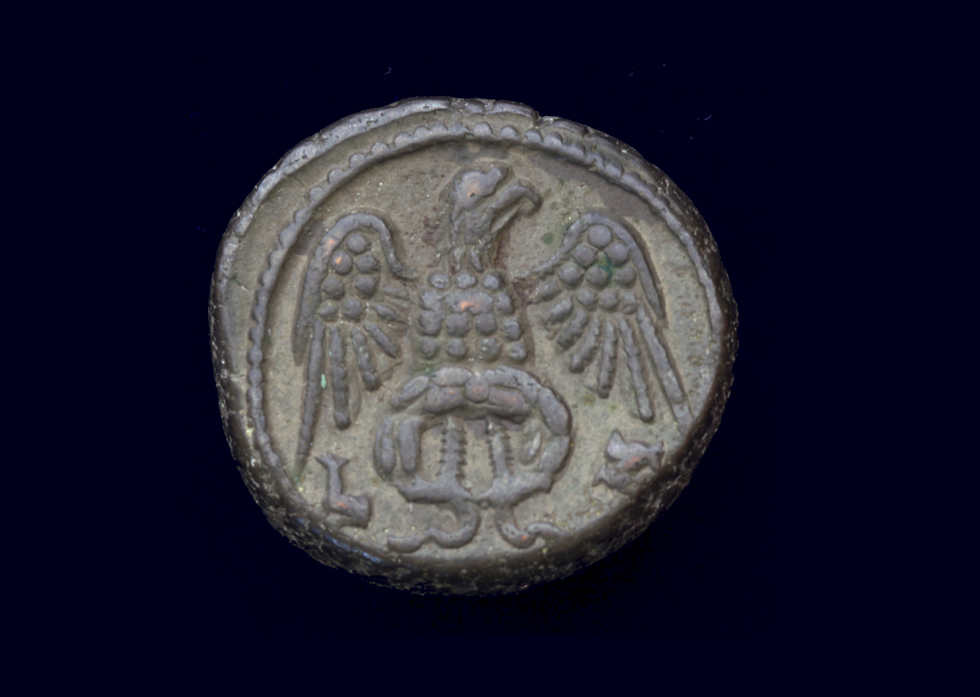

Sulla, This is a fascinating article with many unanswered questions 🤩. The fragmented historical record may never give us positive answers. Nevertheless, we do know the coinage of Hostilian ranges from scarce to extremely rare. I was lucky to win the attached coin at auction 6 years ago 😊.